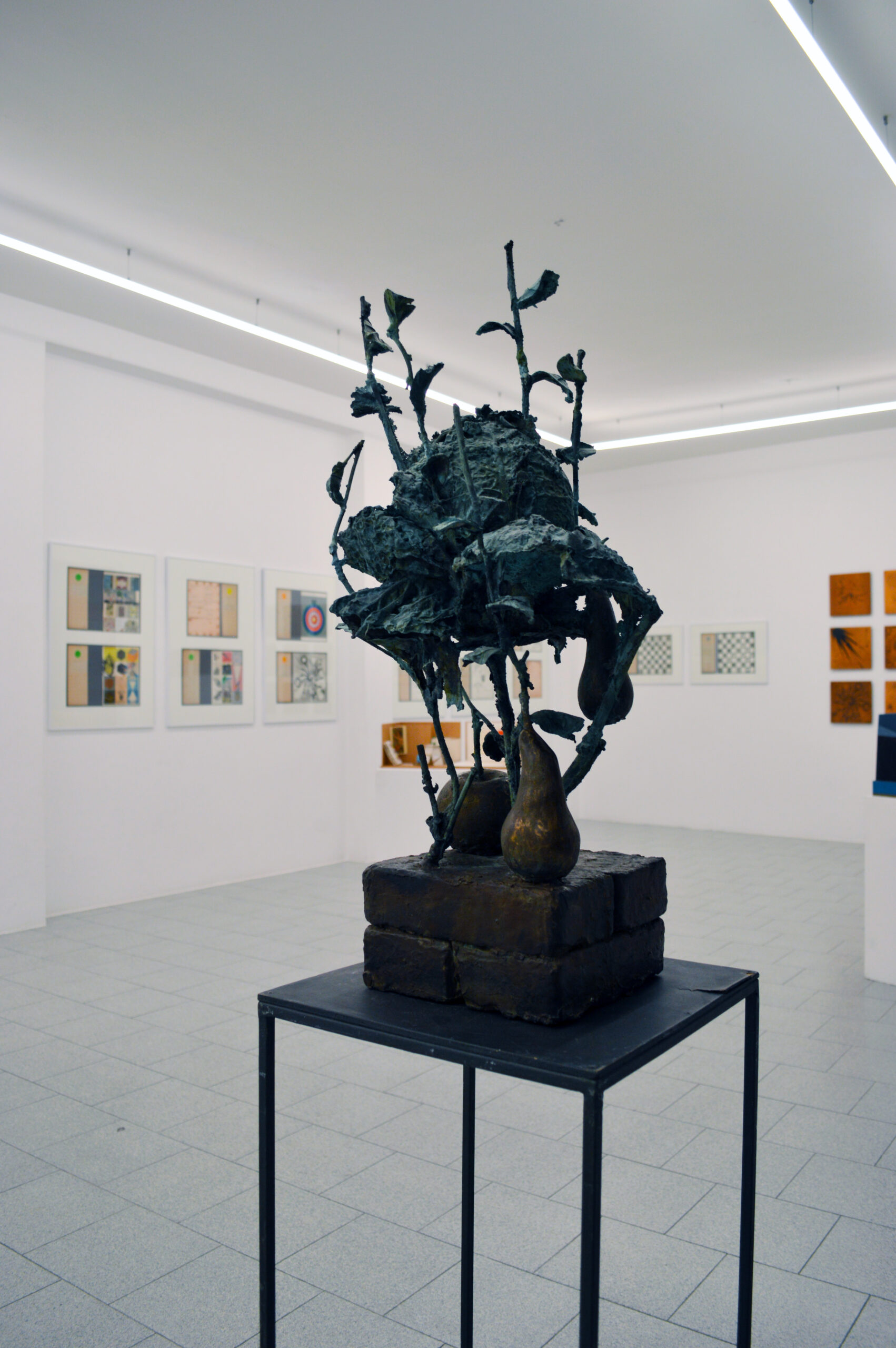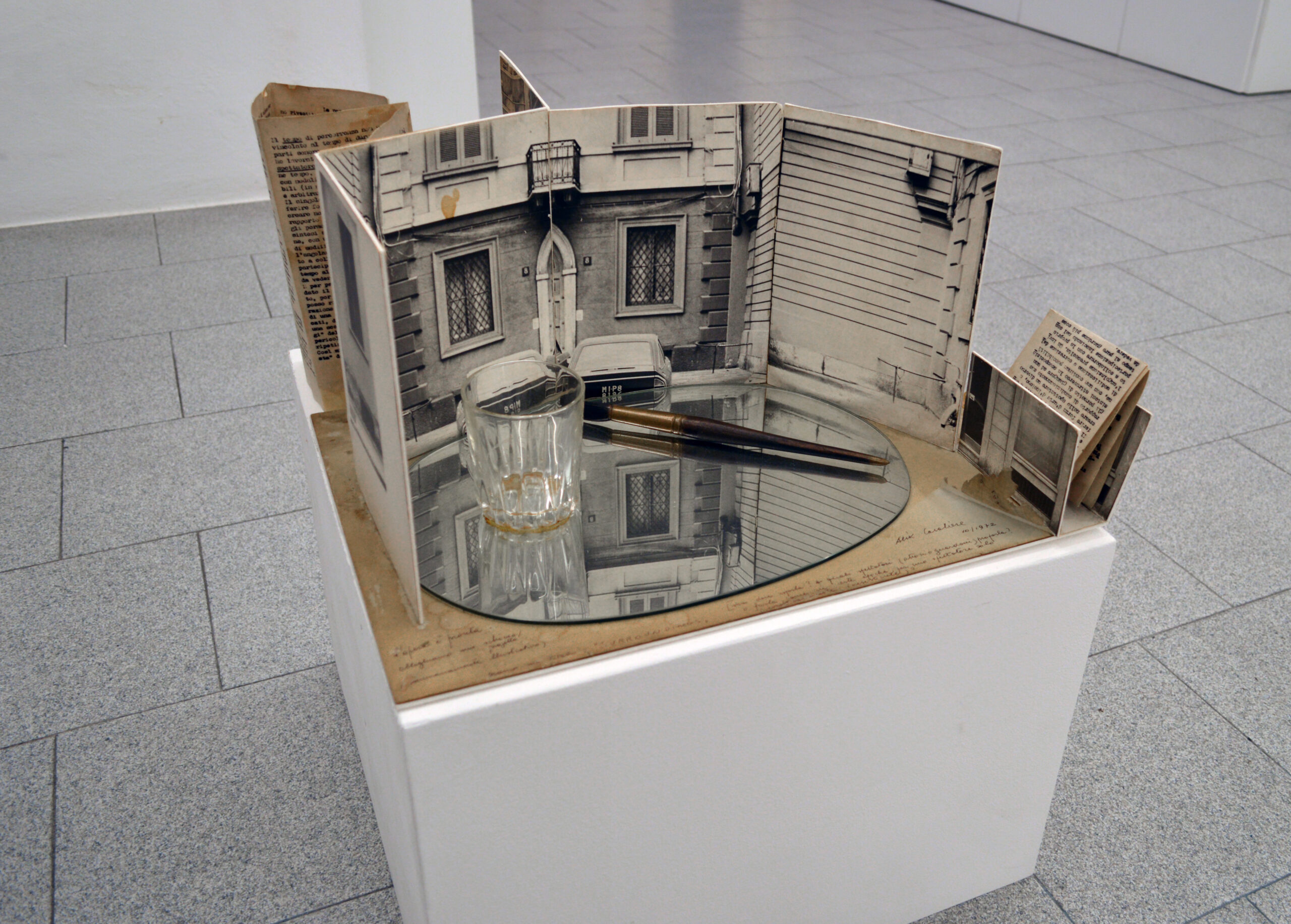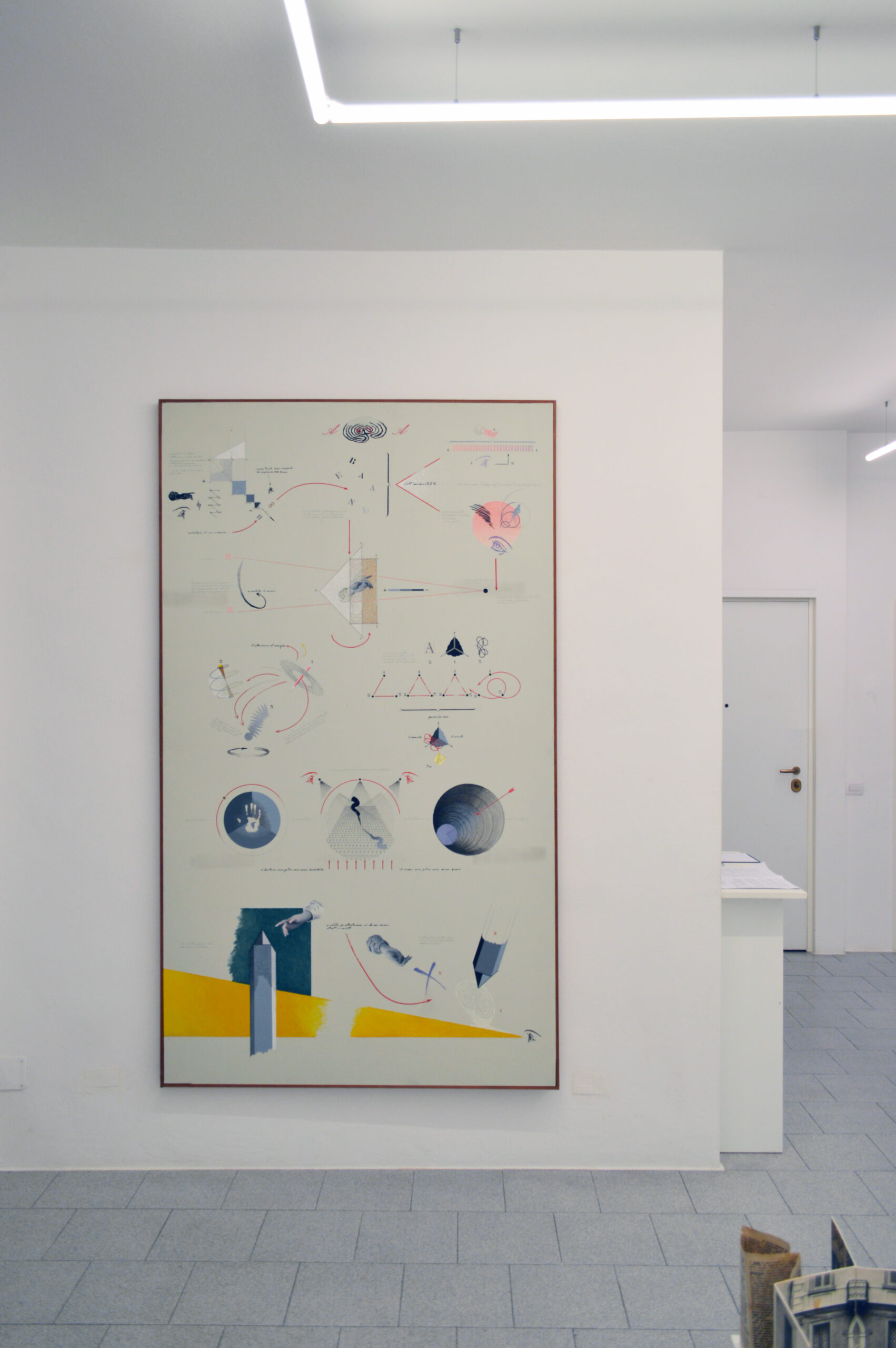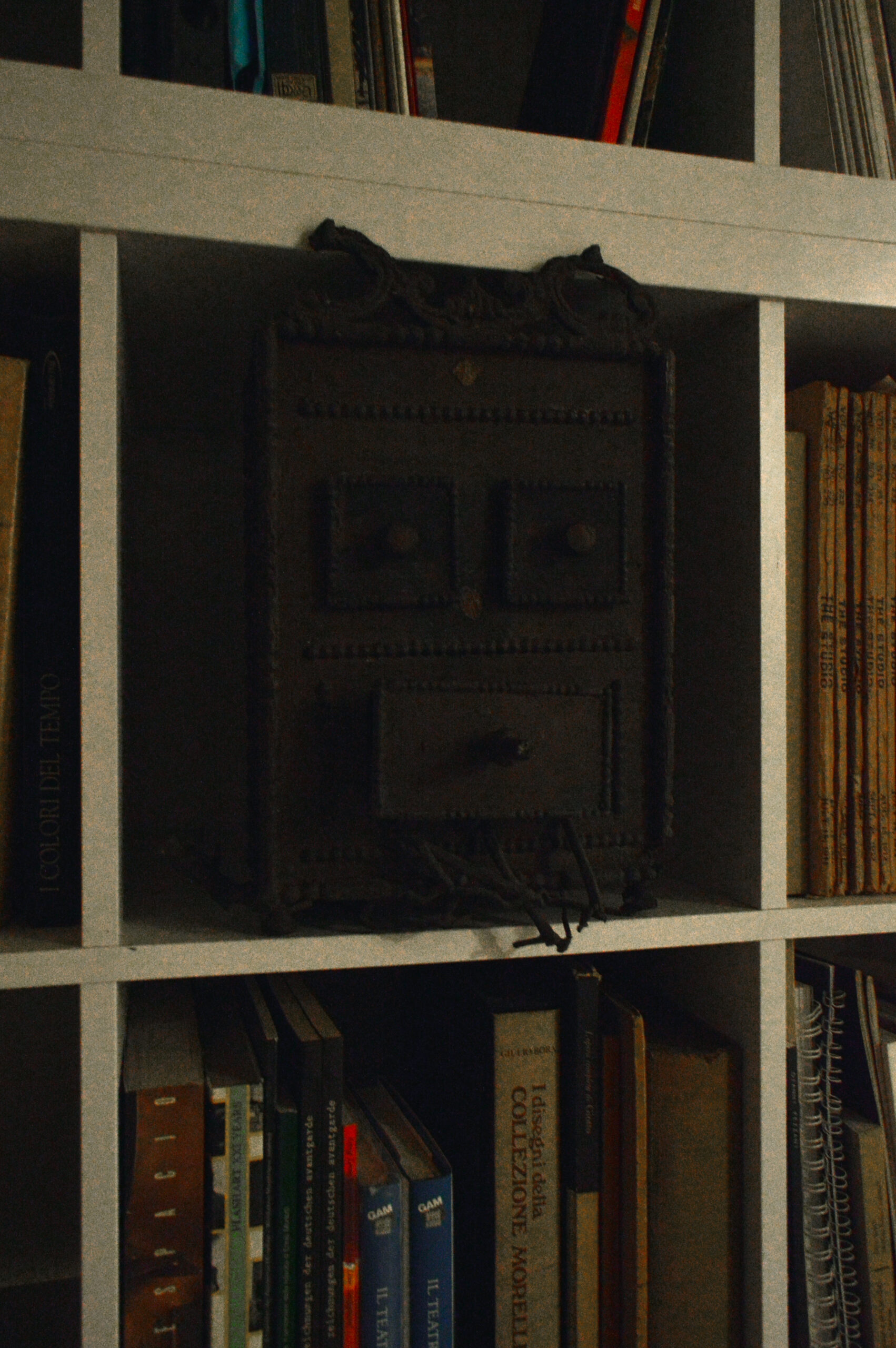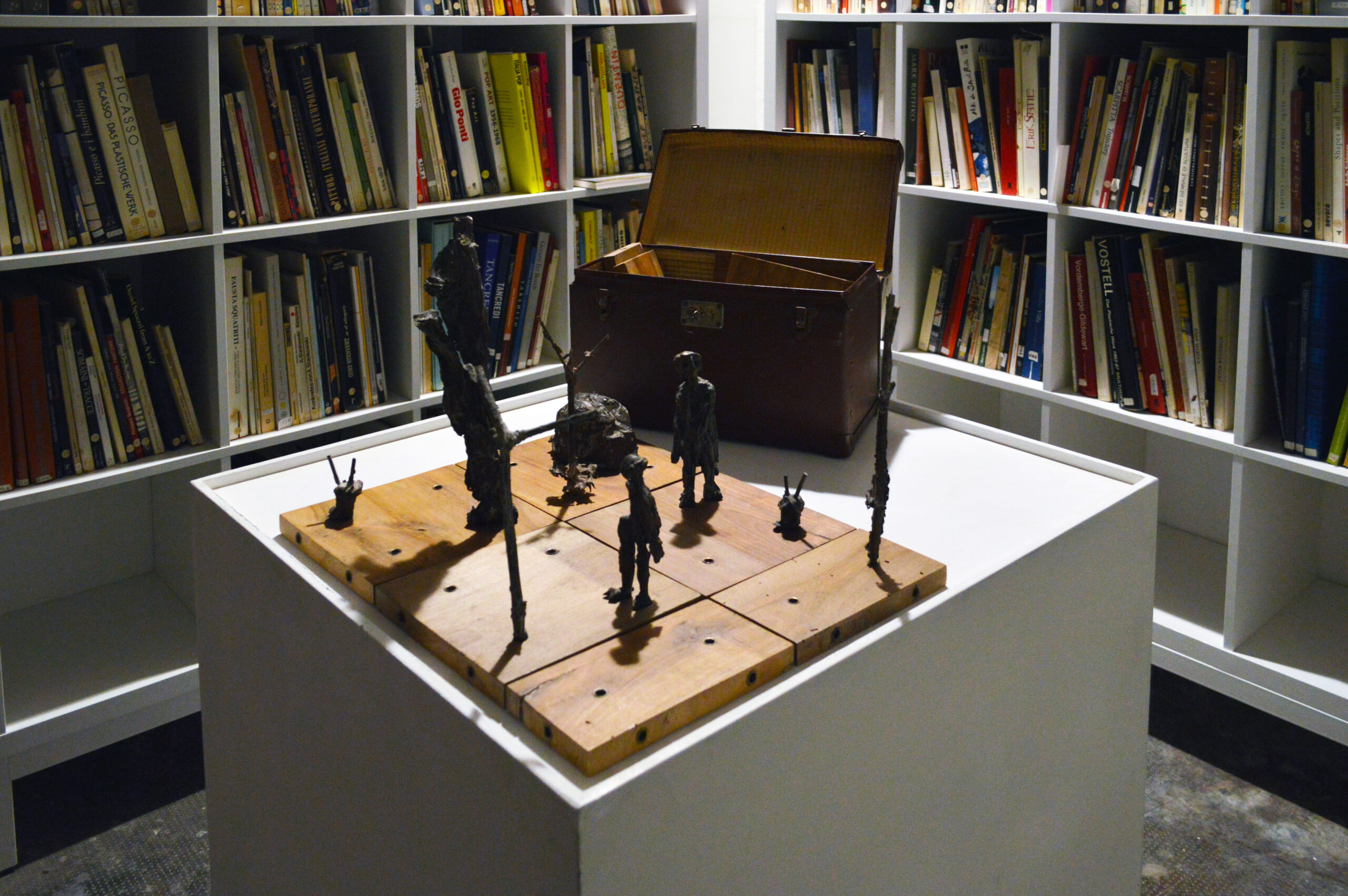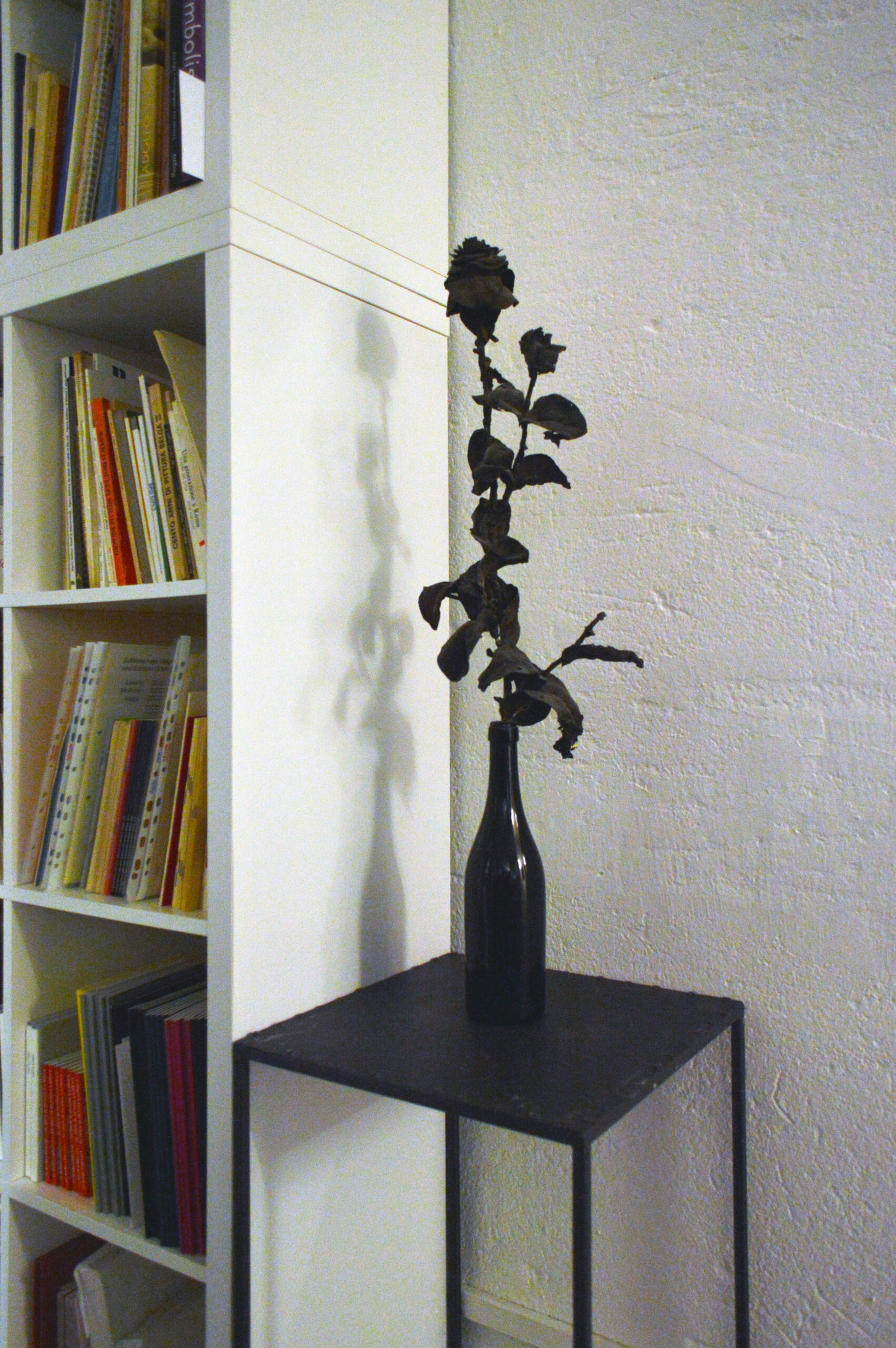

Fondazione Galleria Milano is pleased to invite you to the opening of Viaggio attorno a un tavolo (A Journey Around a Table). Alik Cavaliere and Vincenzo Ferrari, curated by Bianca Trevisan and Nicola Pellegrini. Thanks to the discovery of previously unpublished documents, the exhibition reconstructs the dense web of correspondences between Alik Cavaliere (Rome, 1926 – Milan, 1998) and Vincenzo Ferrari (Cremona, 1941 – Milan, 2012). The two met at the Brera Academy, where they both taught, in the early 1970s. Their approaches were different, apparently distant: the former has a narrative language oriented towards matter, the latter a diagrammatic one. Yet in their almost daily meetings, in one or the other’s studio, they found a shared device of thought: the everyday object.
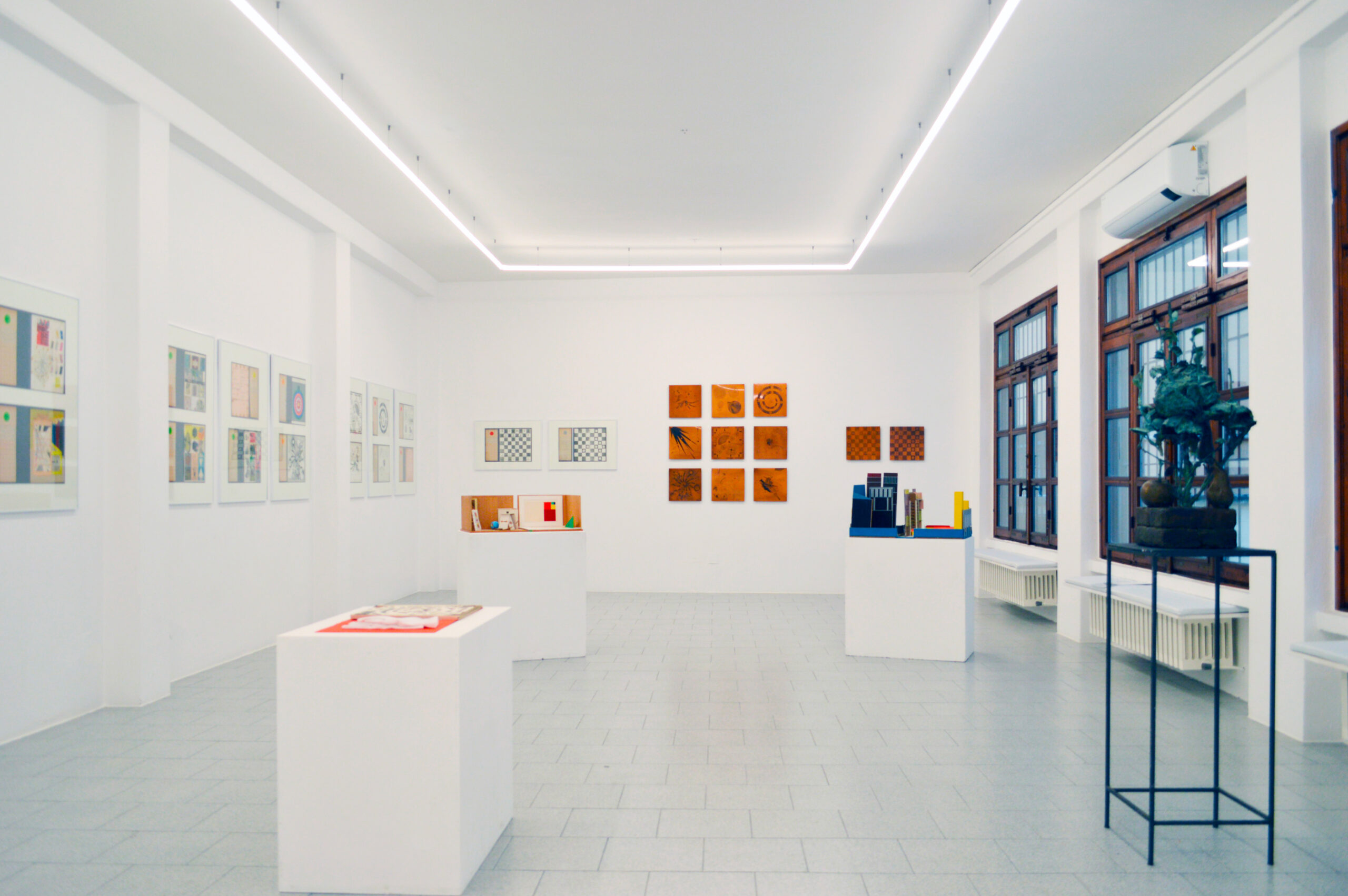
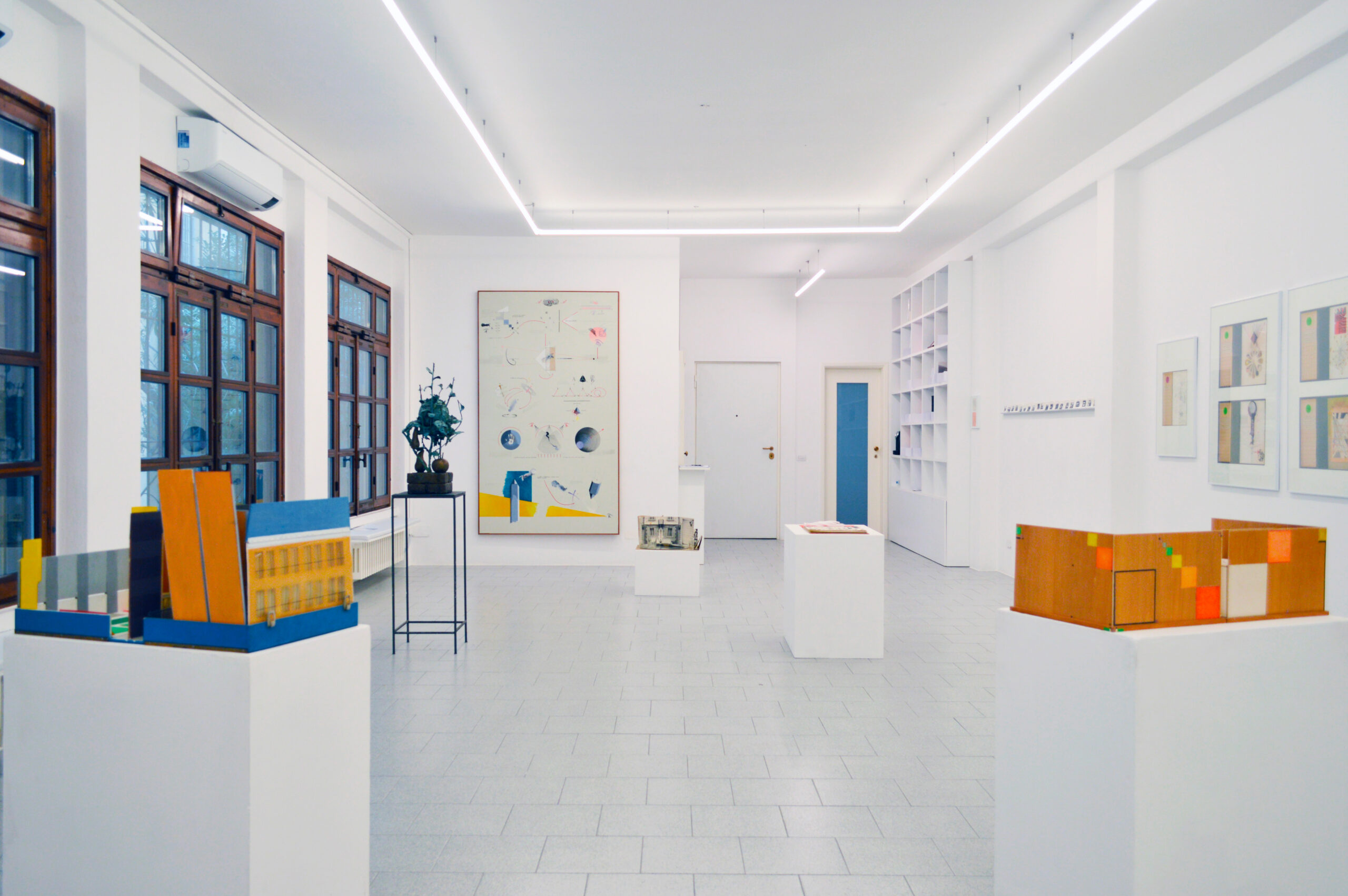
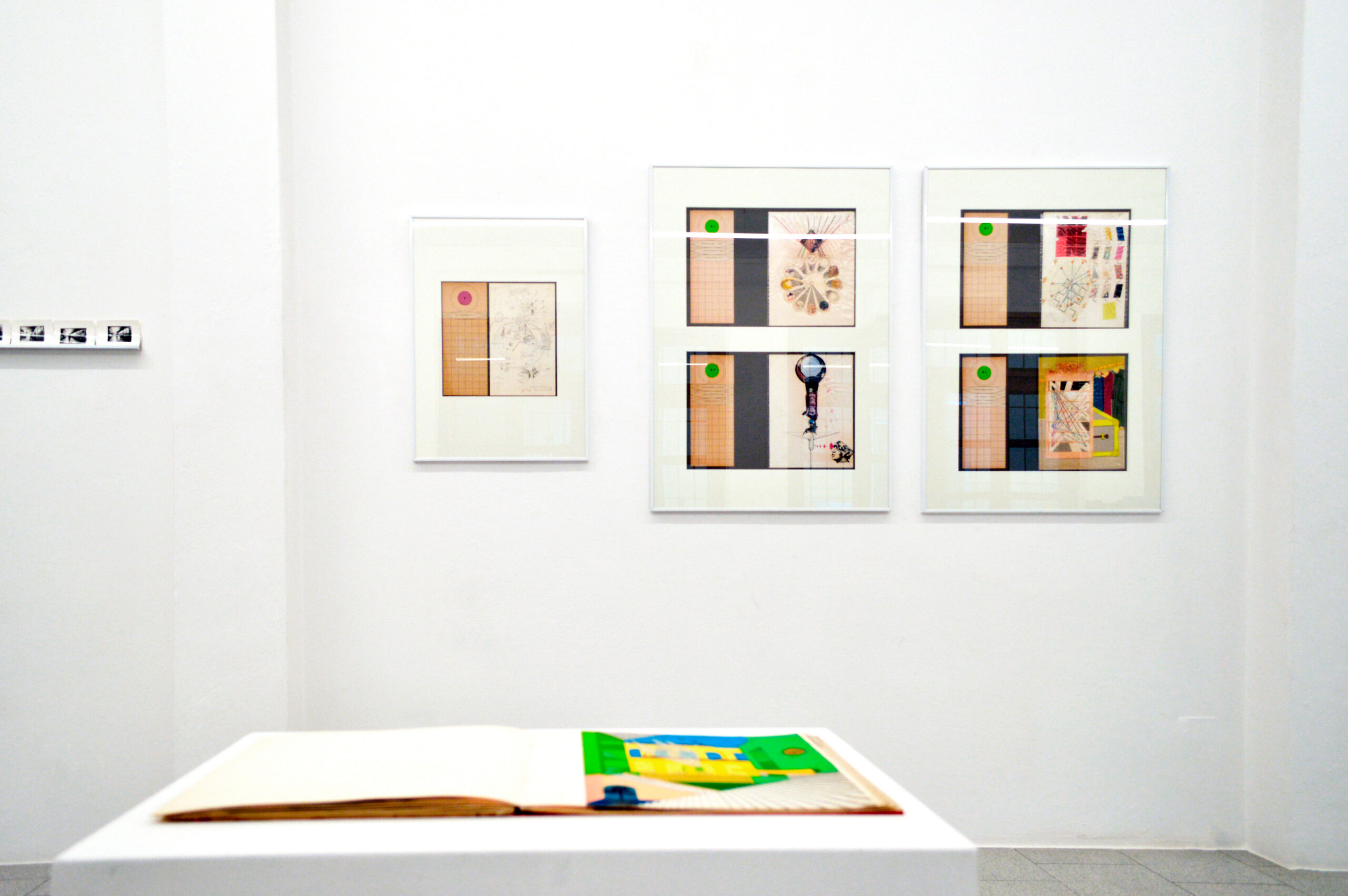
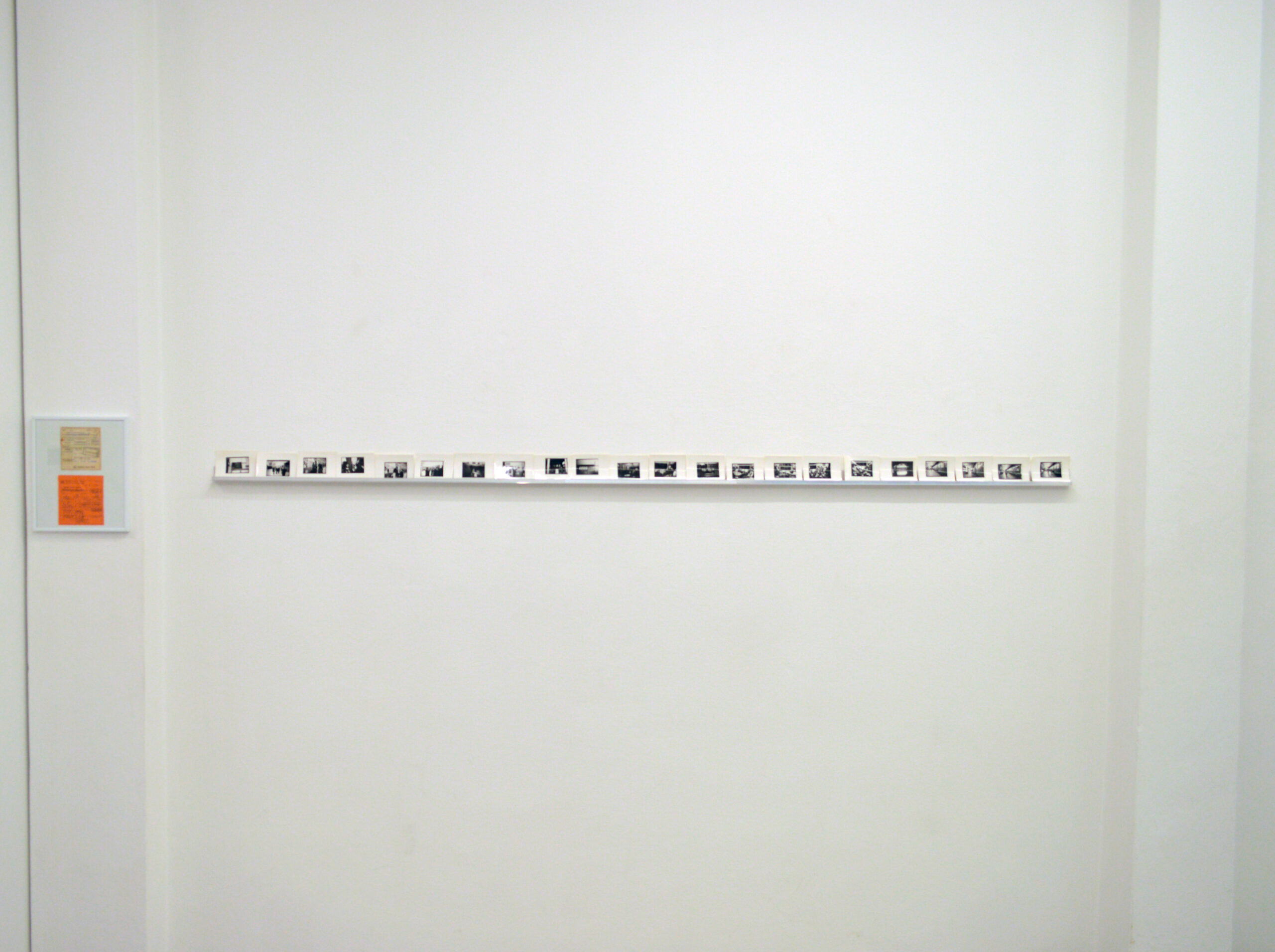
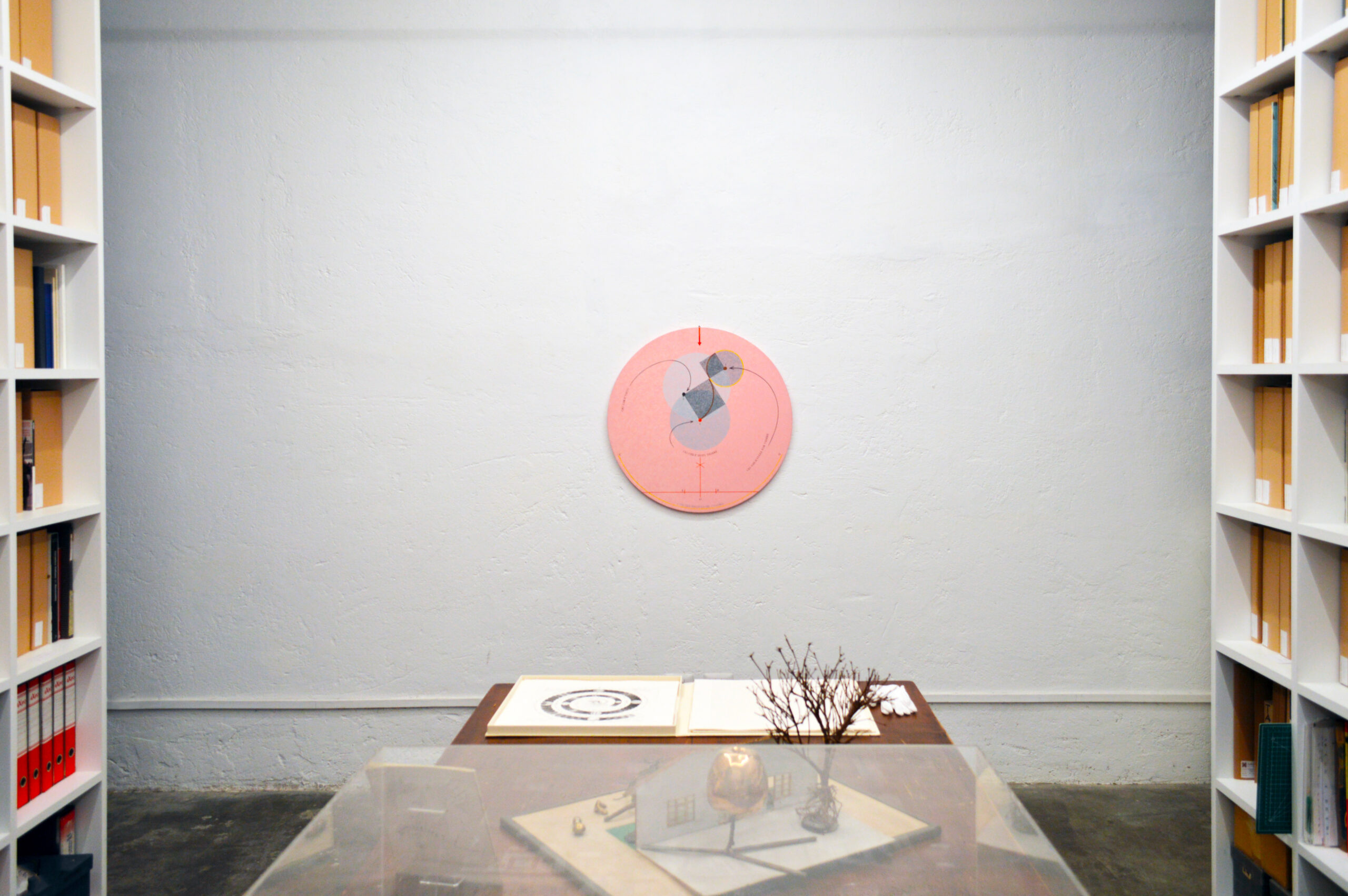
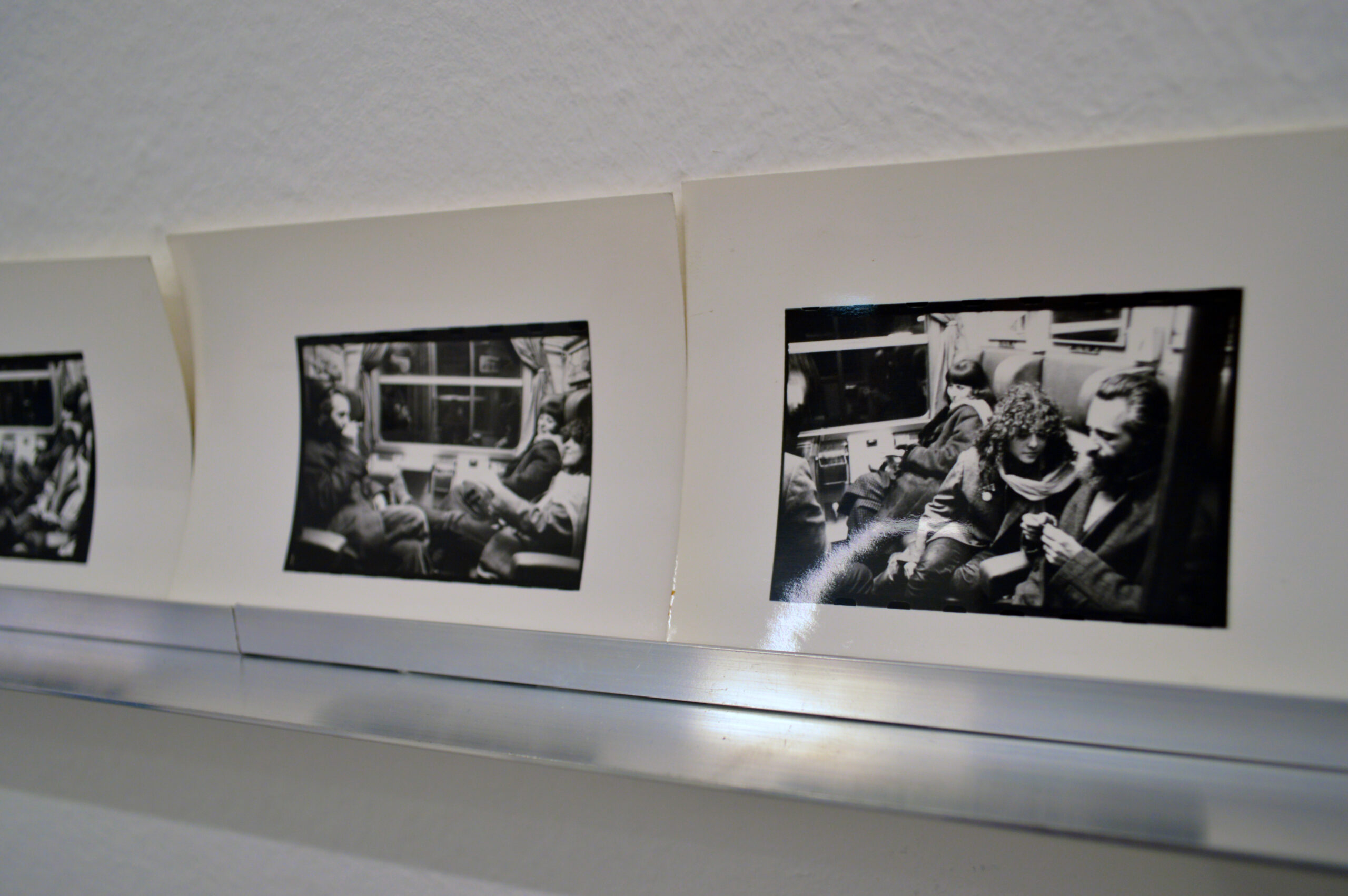
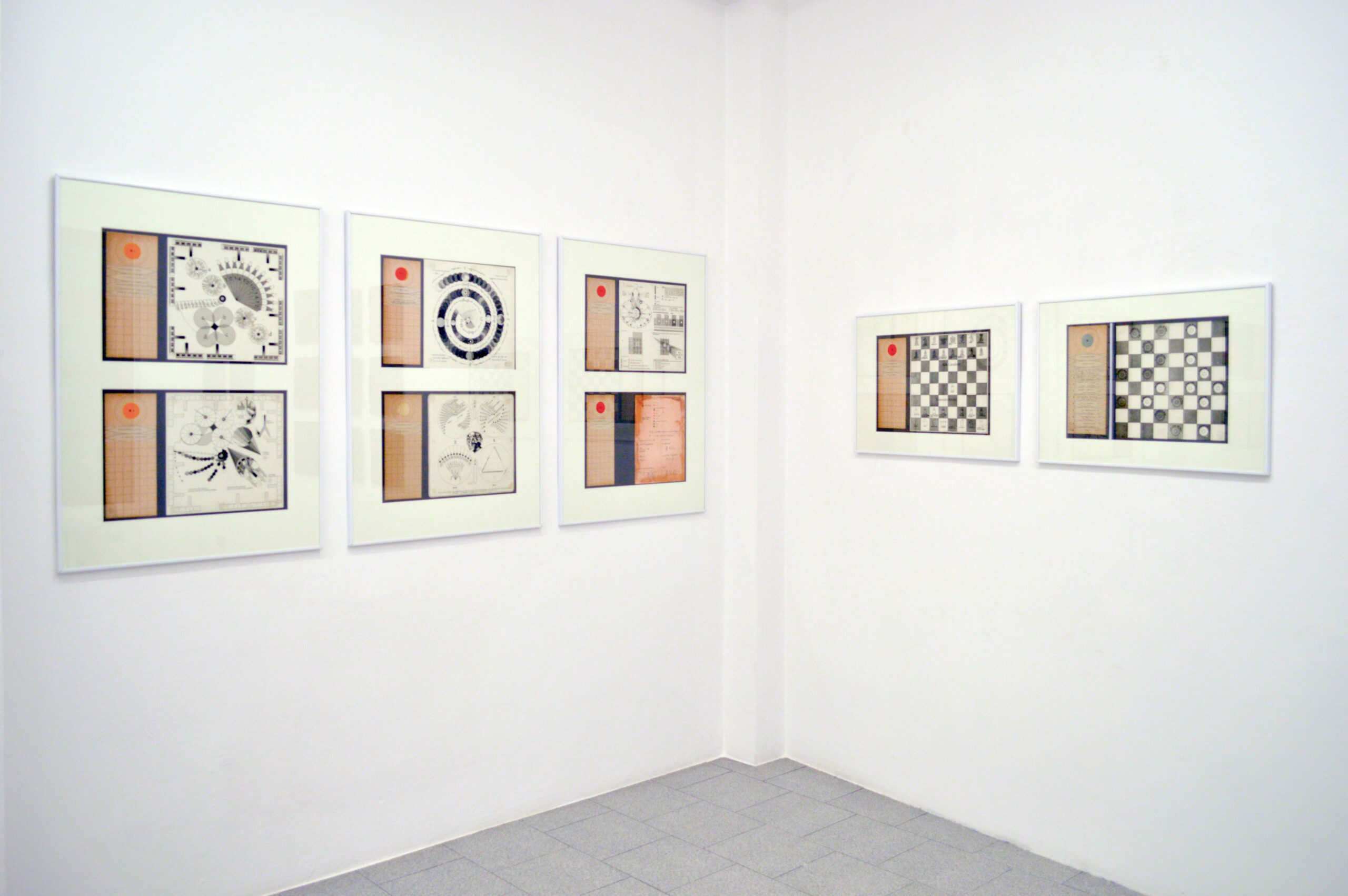
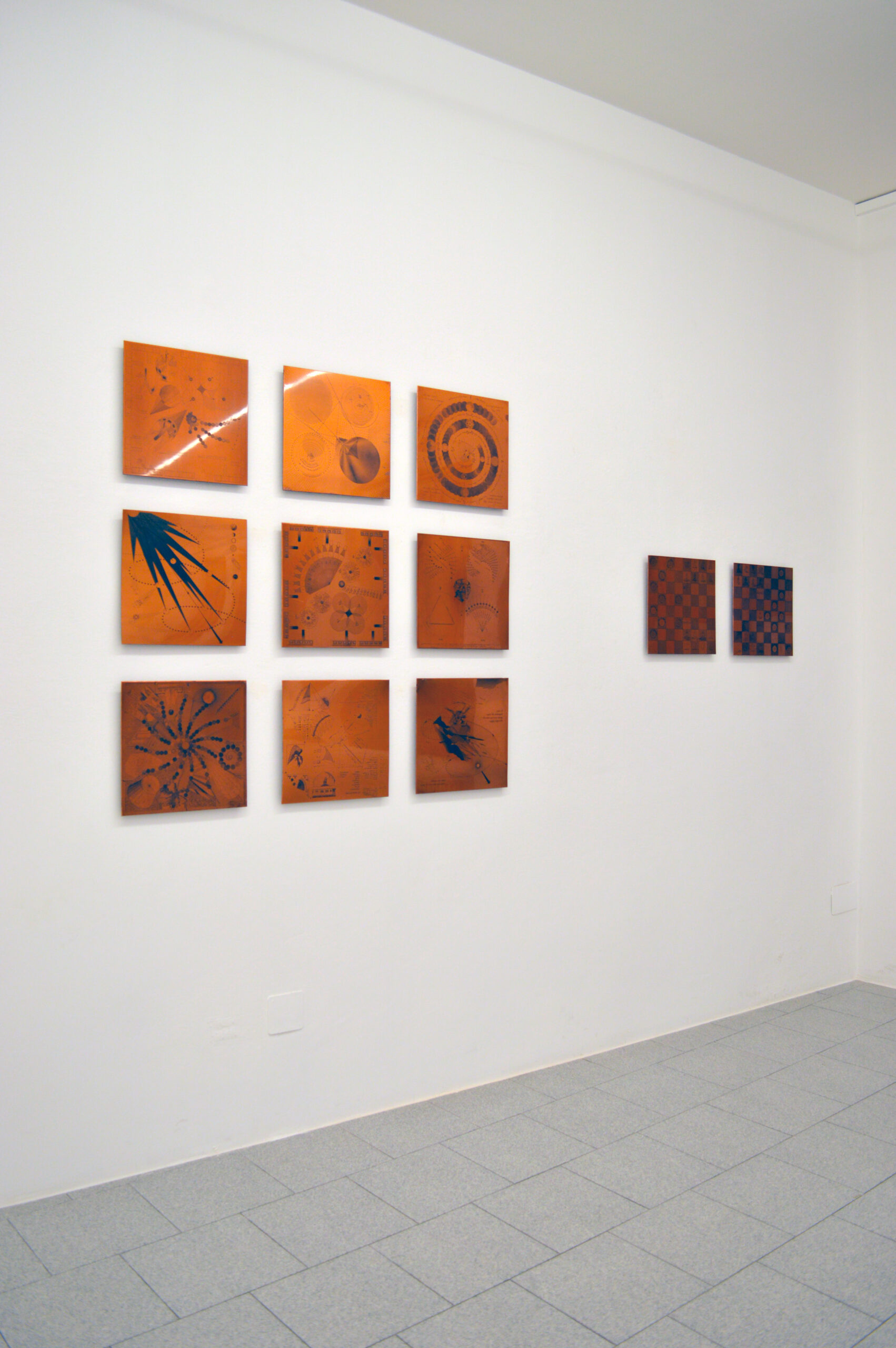
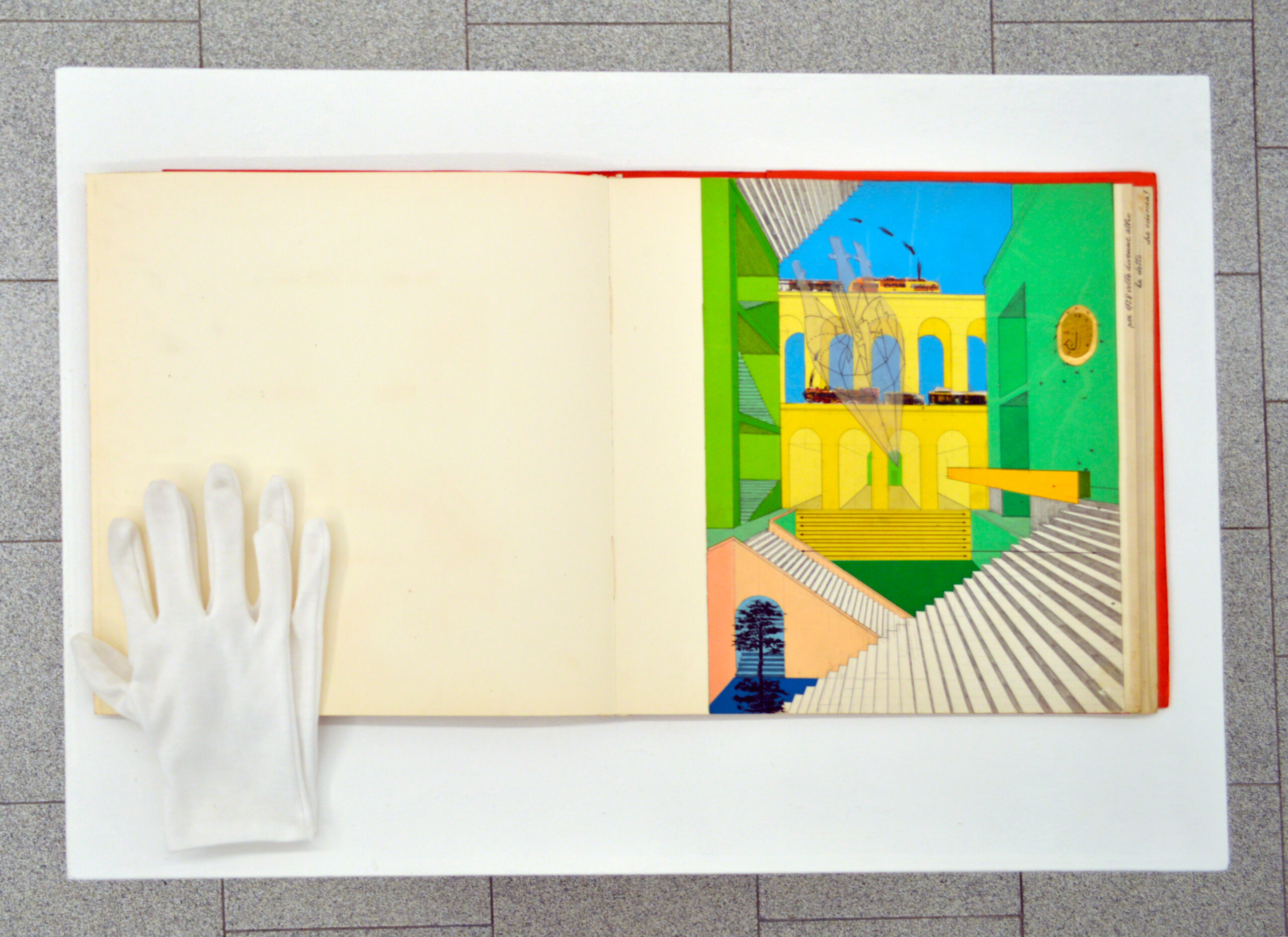
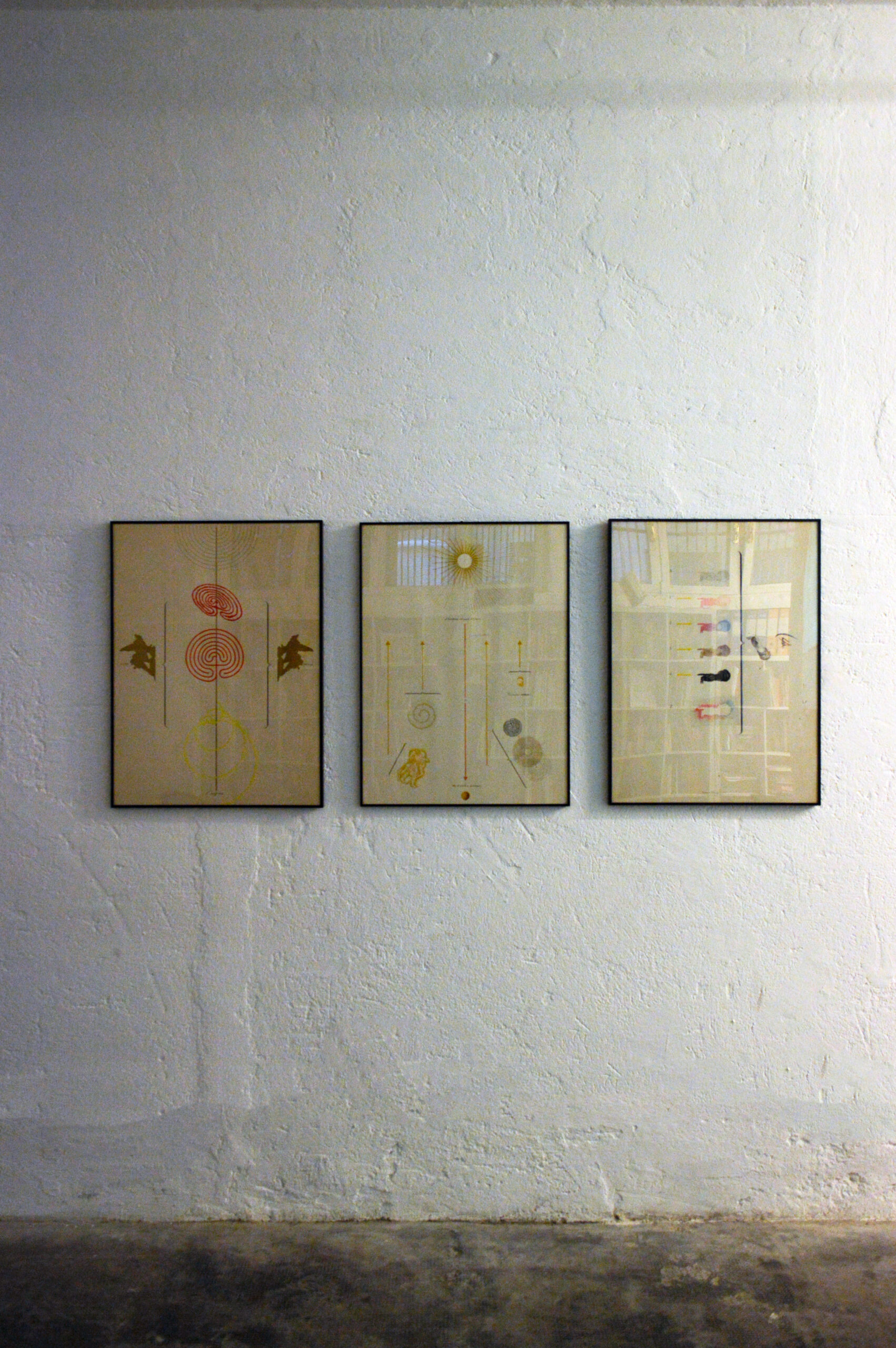
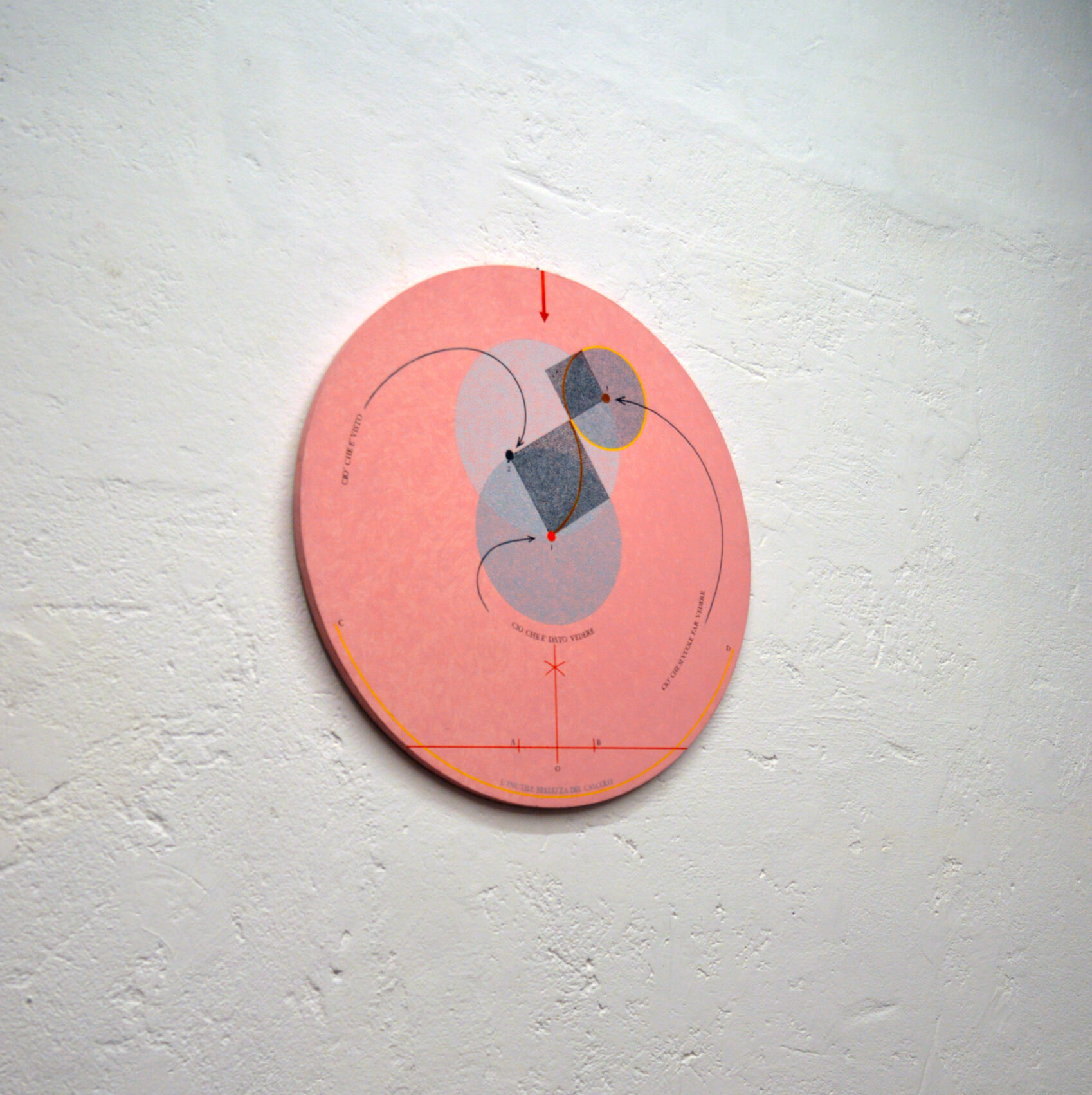
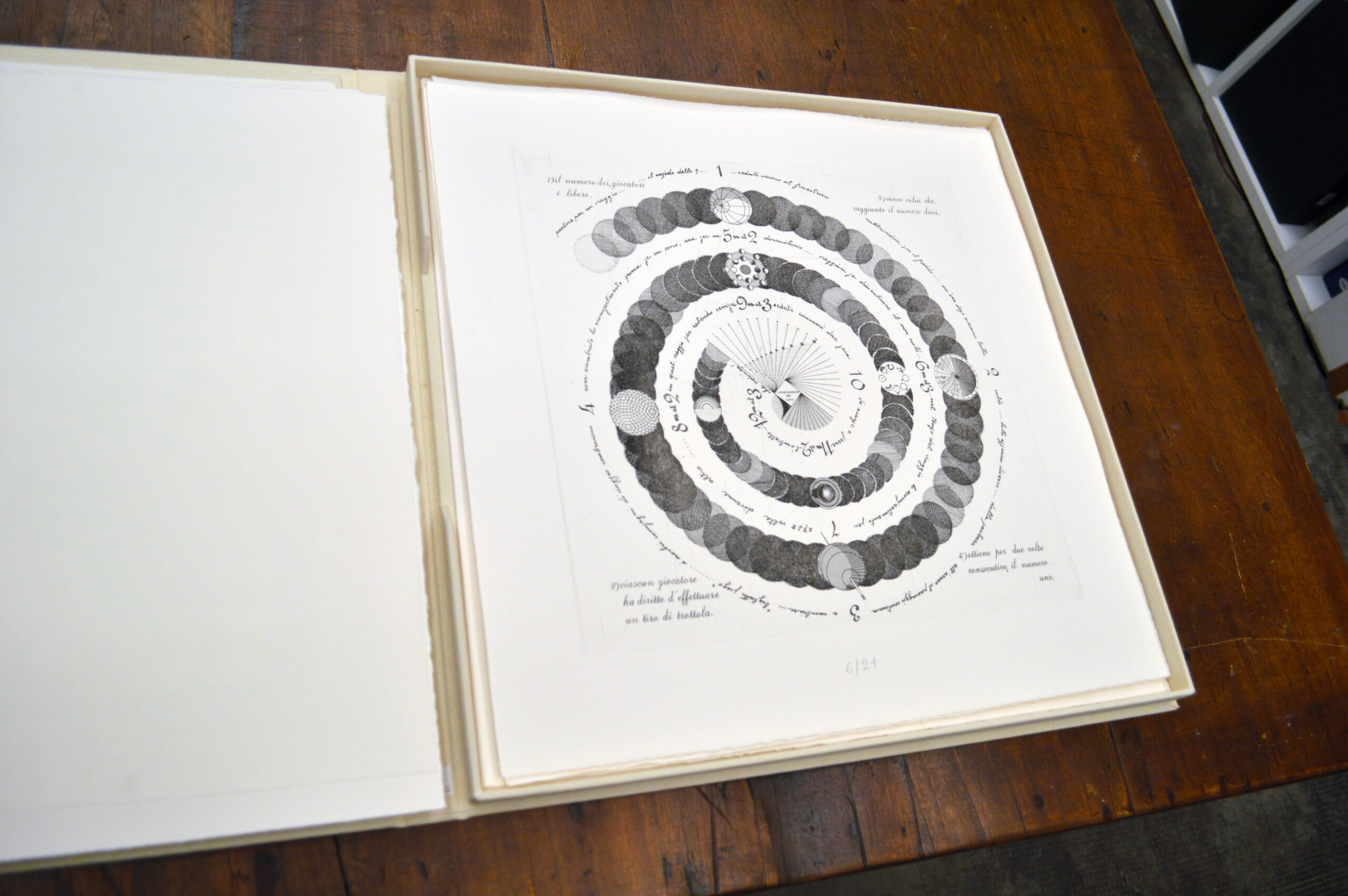
The upper floor of the Fondazione hosts a reconstruction of the installation Attraversare il tempo (Crossing Time), created between 1978 and 1979 by Alik Cavaliere and Vincenzo Ferrari and presented in Como and Alessandria. Attraversare il tempo is a visionary and impossible space-time journey: a utopian attempt to make visible the concepts set out in Einstein’s theory of relativity, a game of chess the two play against each other, and a proposed train itinerary from Como to Milan that would actually be undertaken with the family of their artist friend Bobo Piccoli. The original matrices, made by photoetching with Giorgio Upiglio in 1979 – long left unpublished, and from which 12 etchings were produced only in 2004 – are accompanied by the preparatory projects, the notebook in which the two artists documented the creative and conceptual process, and photographs of the journey with the Piccoli family. Also on view are other works by the artists made between the 1960s and the mid-1980s, which help reconstruct the genesis of their research and understand why, in the end, the game ran its course.
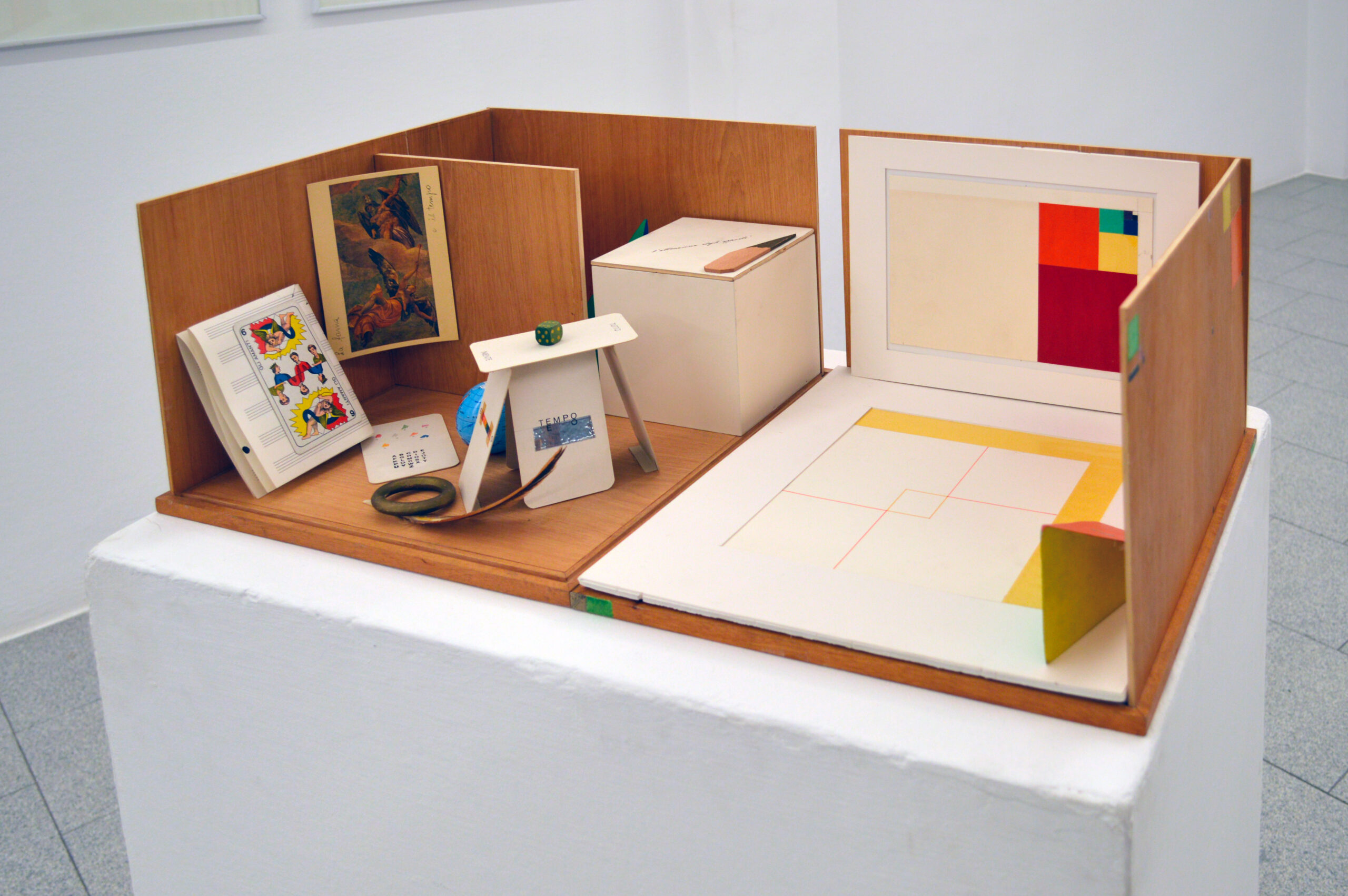
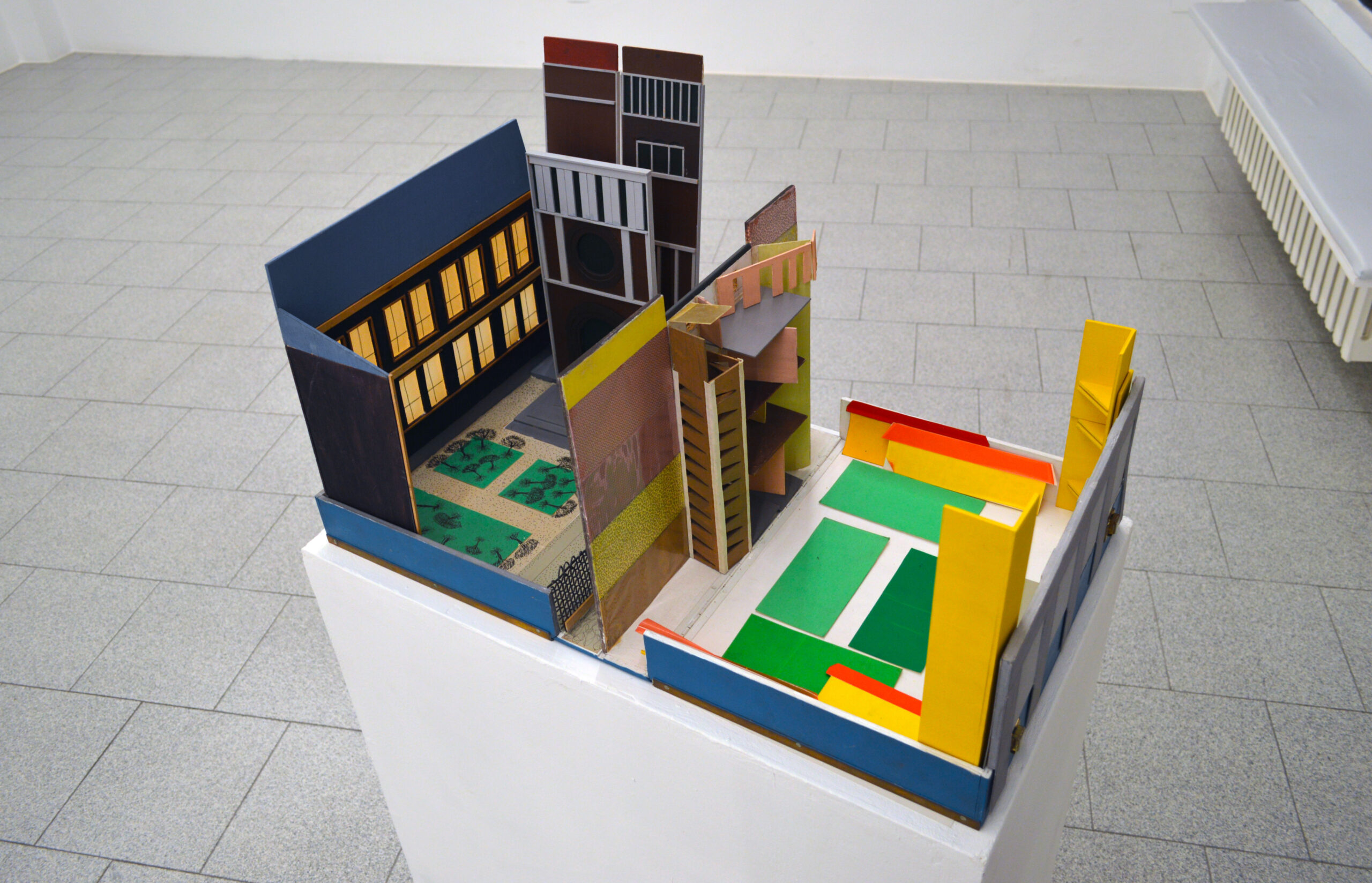
As Cavaliere recounts in his notebooks: “We worked together for a year, tackling a theme with our different experiences and working practices […] through second thoughts and checks, we proceeded by elimination, gradually eliminating… everything.” The works on display nevertheless share common traits, with different outcomes: both artists, for example, experimented with works in boxes, or rather in suitcases, taking up Duchamp’s experiment with the boîte-en-valise.
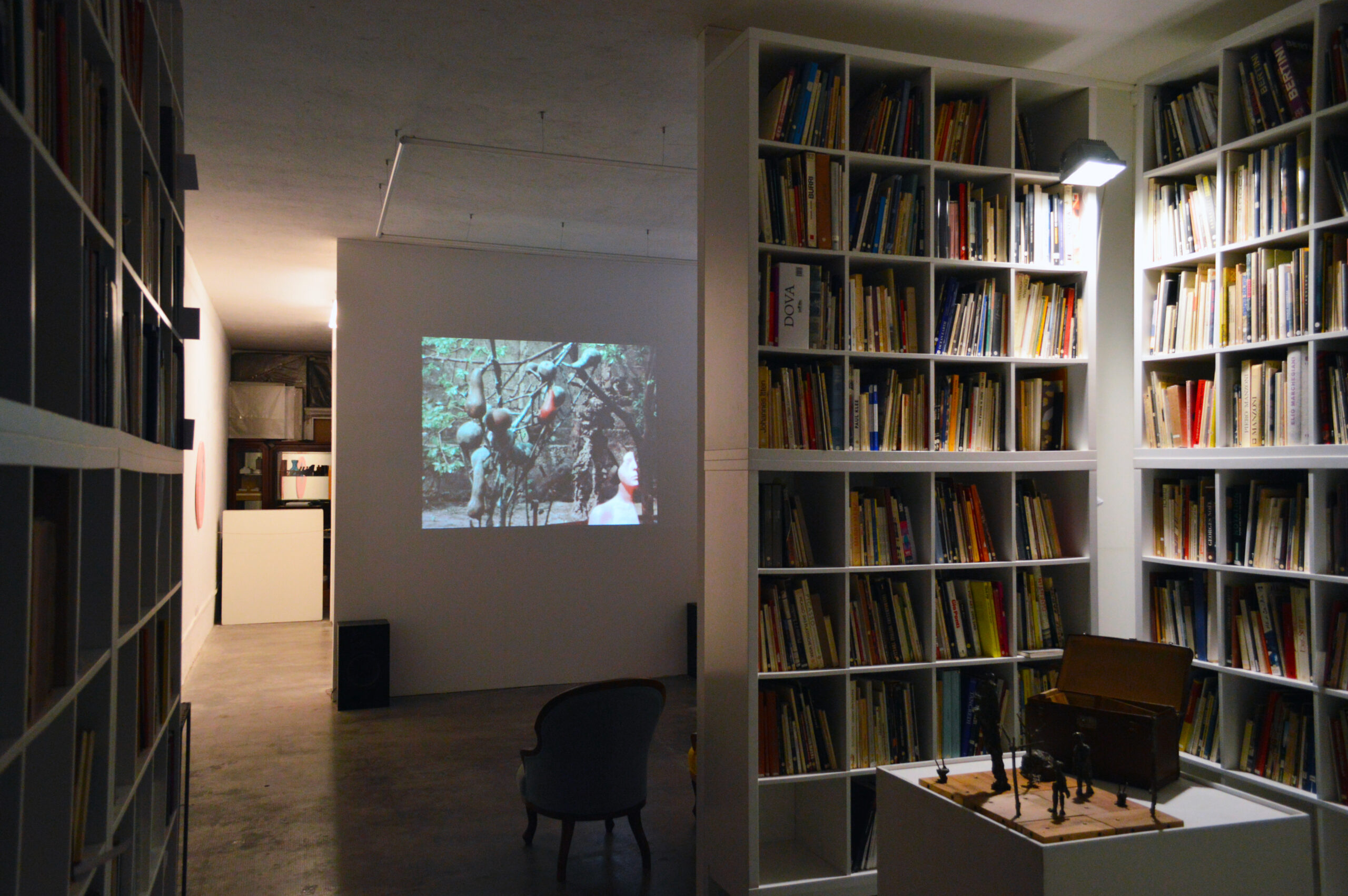
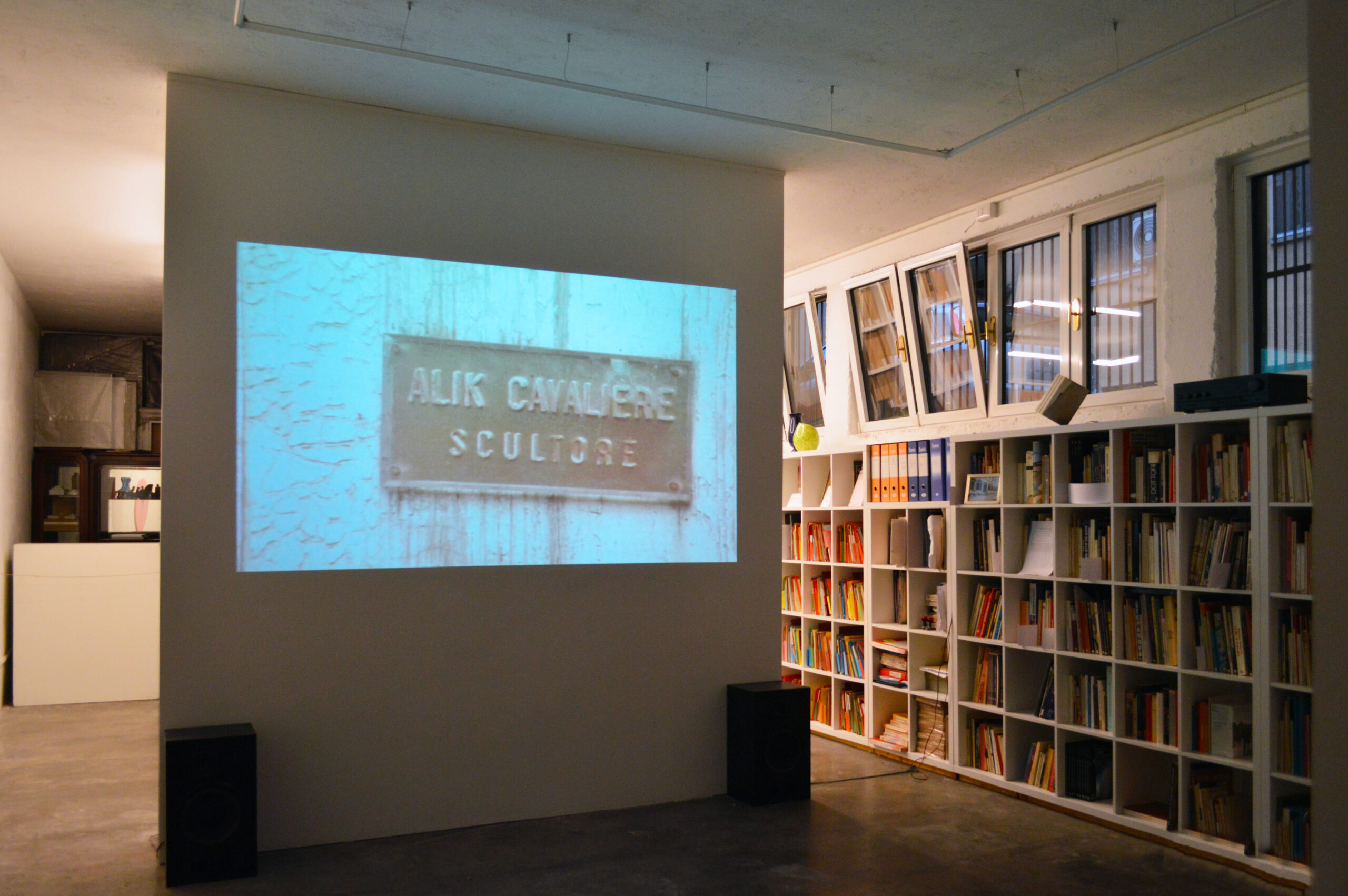
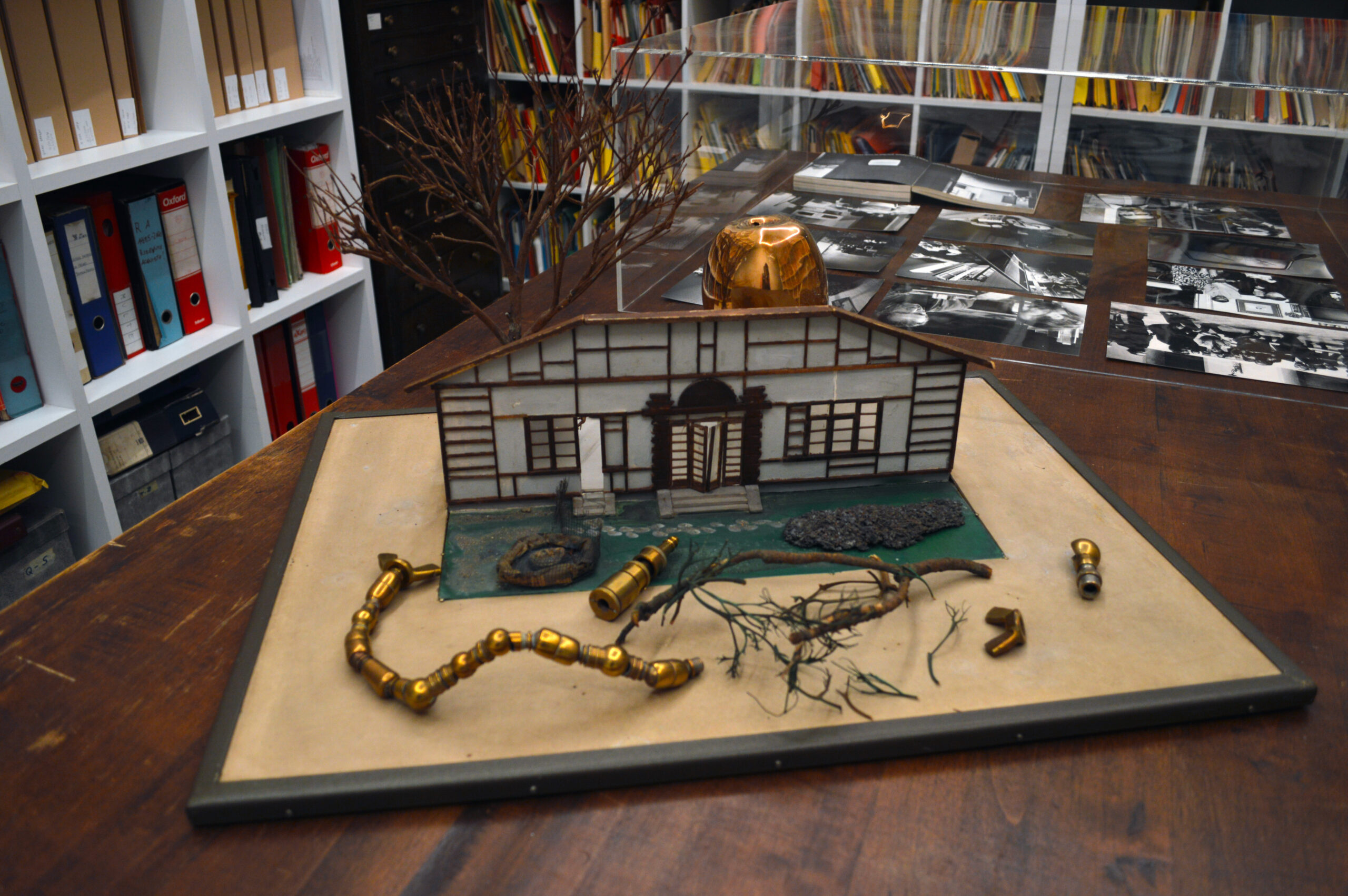
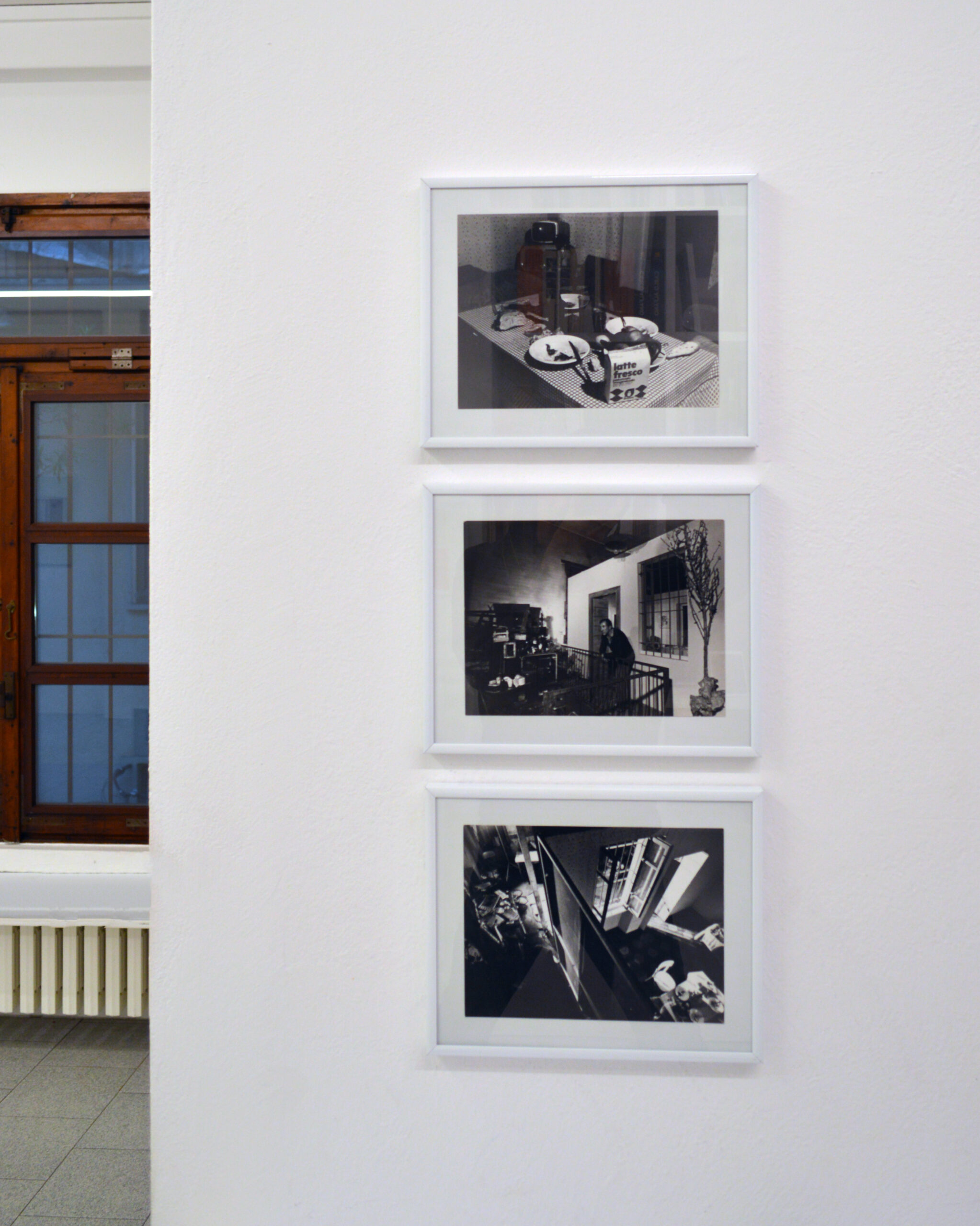
On the lower floor, archival materials, notes and photographs reconstructing the relationship between the two artists in the 1970s are also on view. Raffaele Andreassi’s 1977 film Alik Cavaliere (16 mm, 37′; copy from the CSC–Cineteca Nazionale) is also screened. In it, the artist talks about some of his works from those years, including Una storia quotidiana (An Everyday Story), an installation in his studio at via Bocconi 15 in Milan that shows his interest in everyday life, central to his discussions with Ferrari at the time, as well as other shared elements, such as the investigation of space.
The two artists would continue their collaboration in the following decade, when their dialogue found fertile ground in a shared interest in classicism. The space-time challenge of Attraversare il tempo reaches no conclusion, but this matters little, because what interests them, in Cavaliere’s words, is the testing: “In reality, with Vincenzo, it was not a ‘crossing of time’, as the chosen title said, but a journey around a table, where we played a long game, […] a pretext for testing the game.”
The exhibition is part of the programme dedicated to the centenary of Alik Cavaliere’s birth, promoted by the Centro Artistico Alik Cavaliere. On 15 October, at the Brera Academy of Fine Arts, an international study day dedicated to the artist will be held, curated by Angela Vettese, Fania Cavaliere and Giulia Vandelli. Among others, Bianca Trevisan will also speak, further exploring the conceptual dialogue between the two artists.
In the image: Alik Cavaliere and Vincenzo Ferrari. Courtesy Maria Mulas.
Installation view: ph Lorenzo Benzoni